ENTOMBED IN JOY - 2023
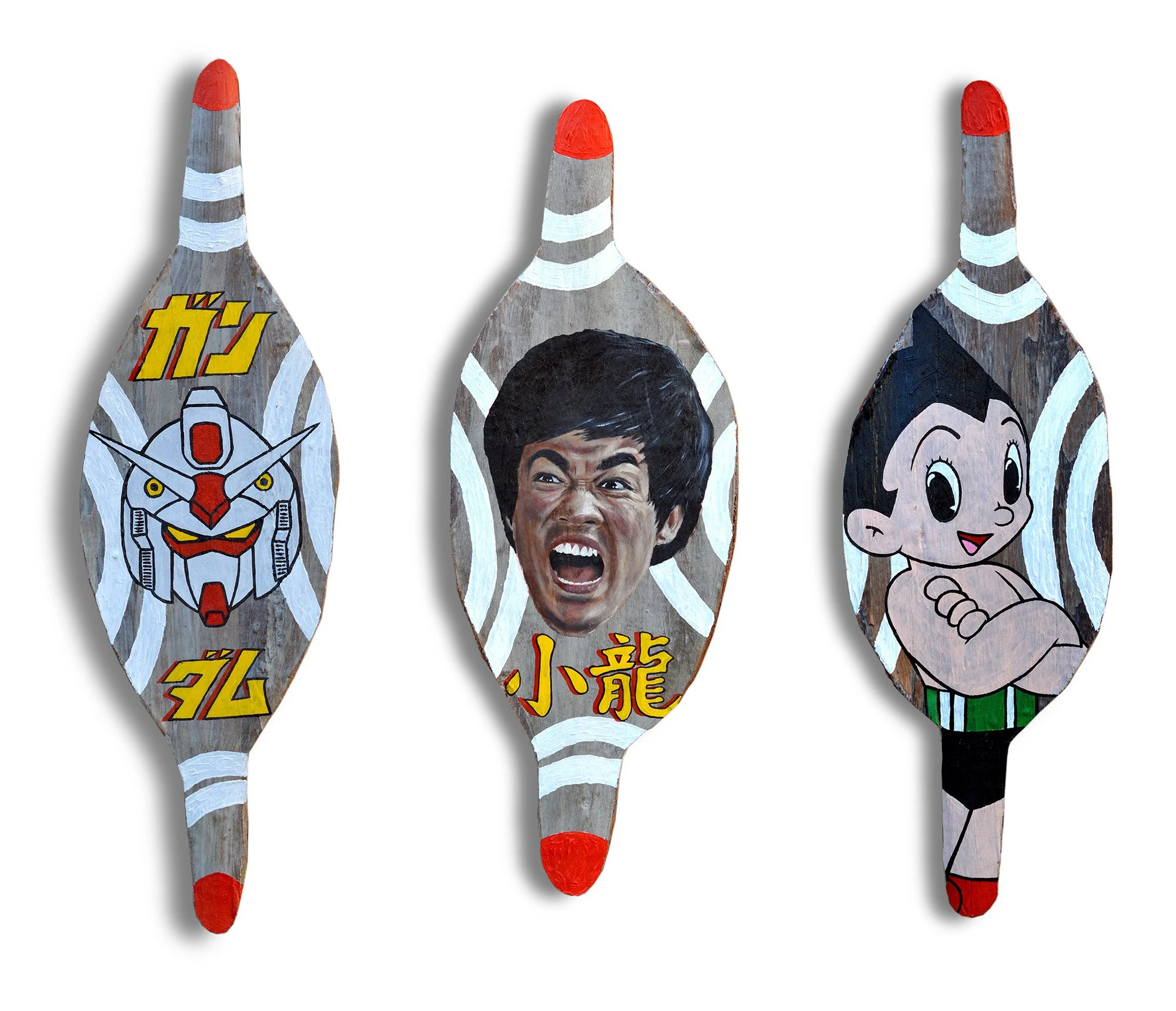
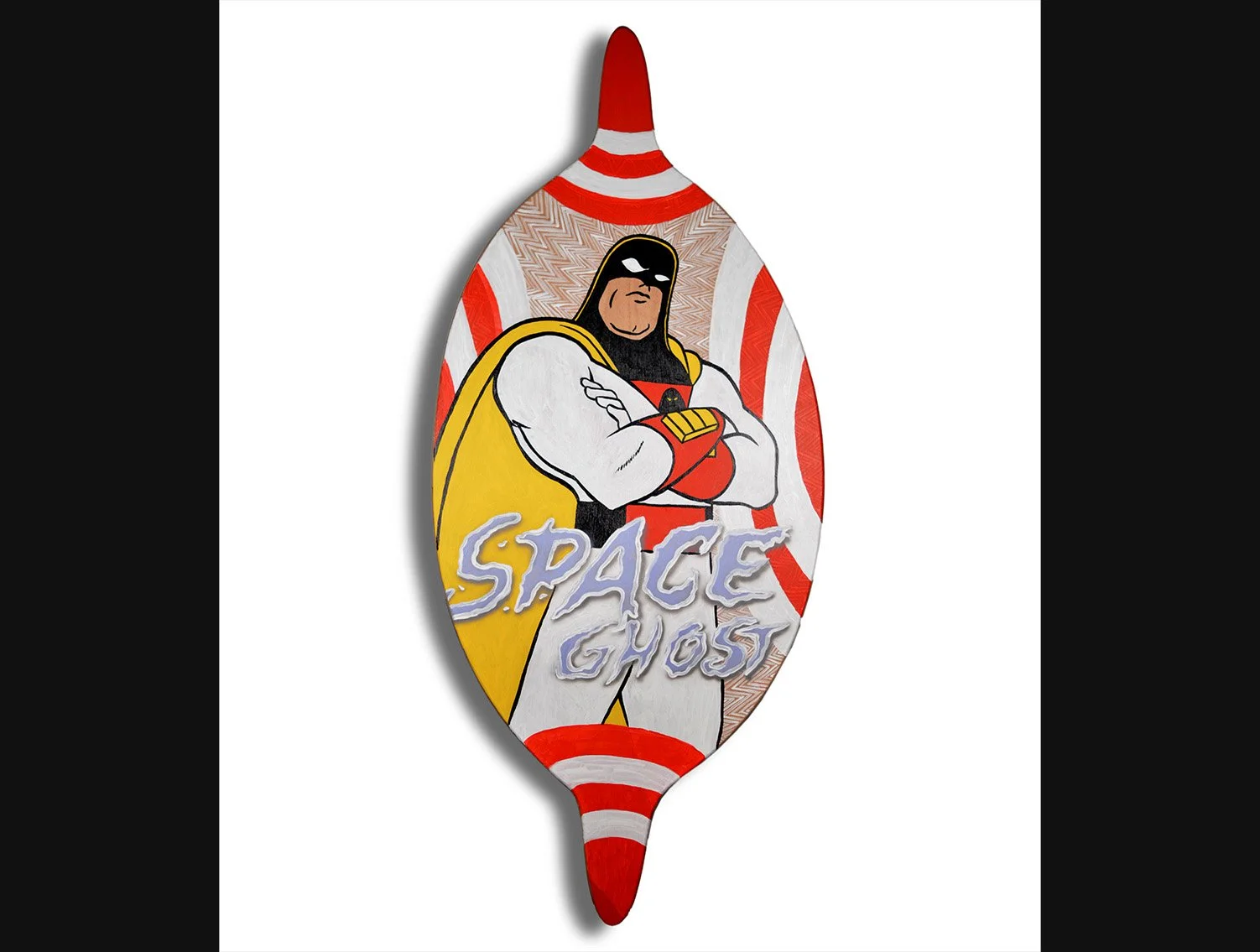
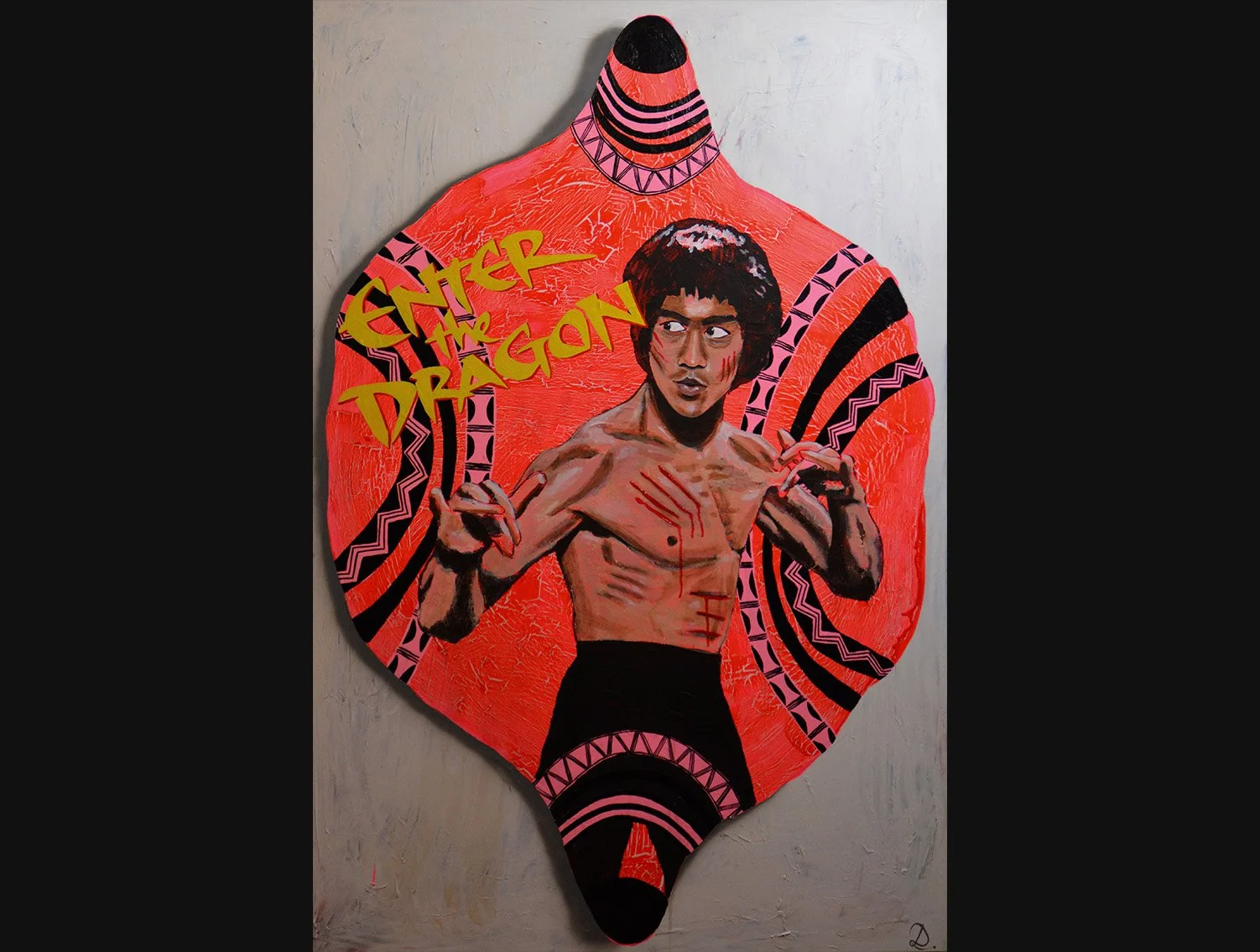
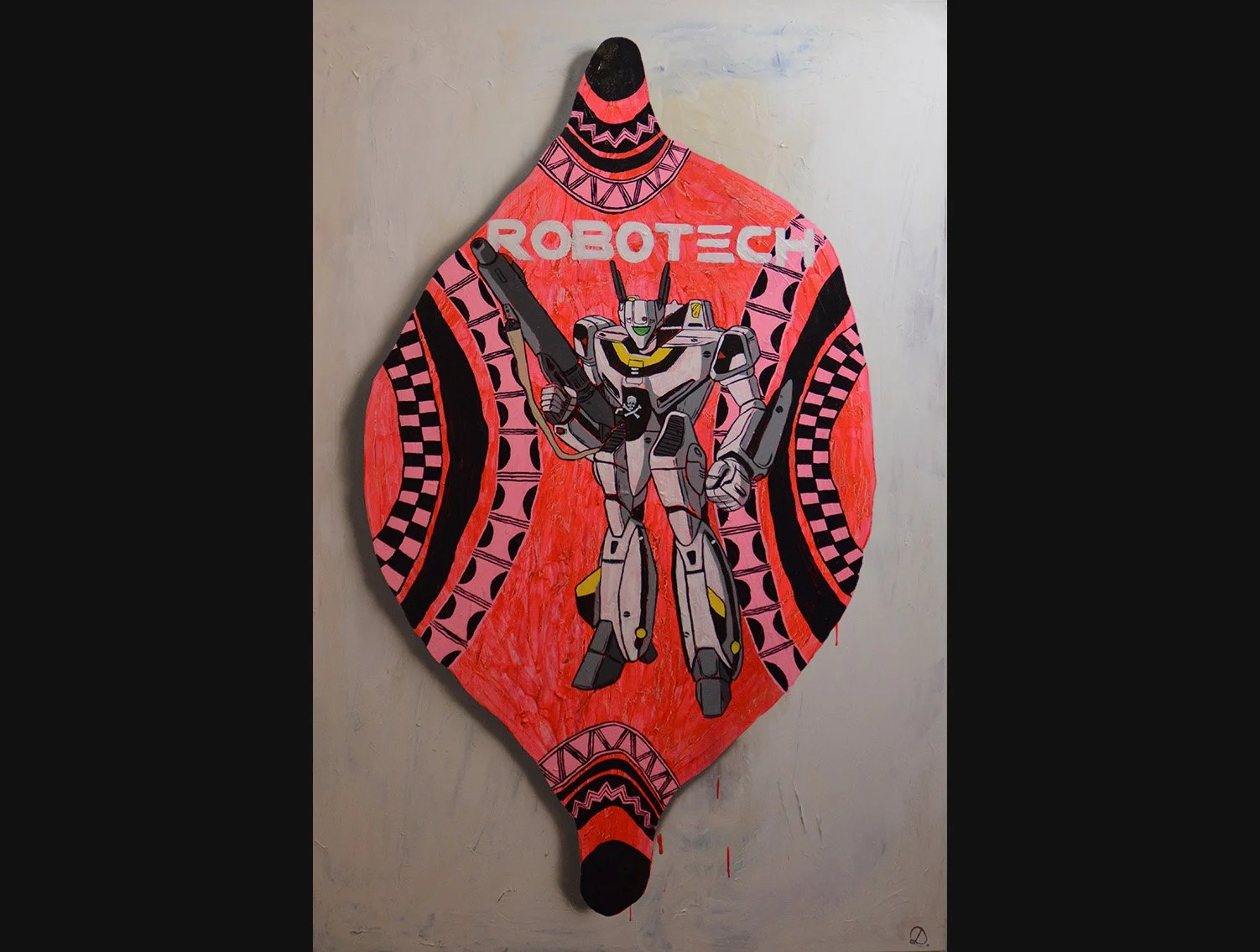
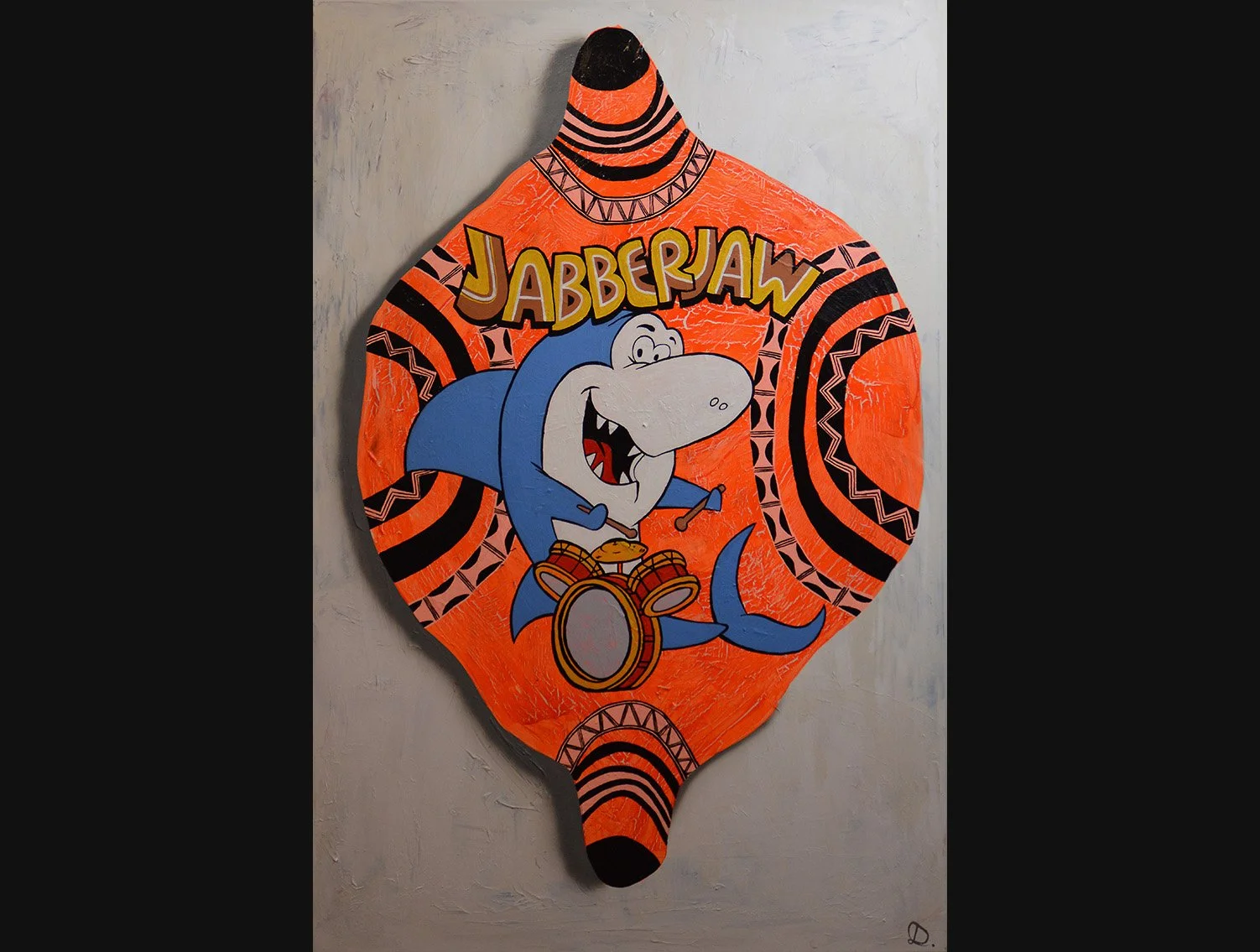
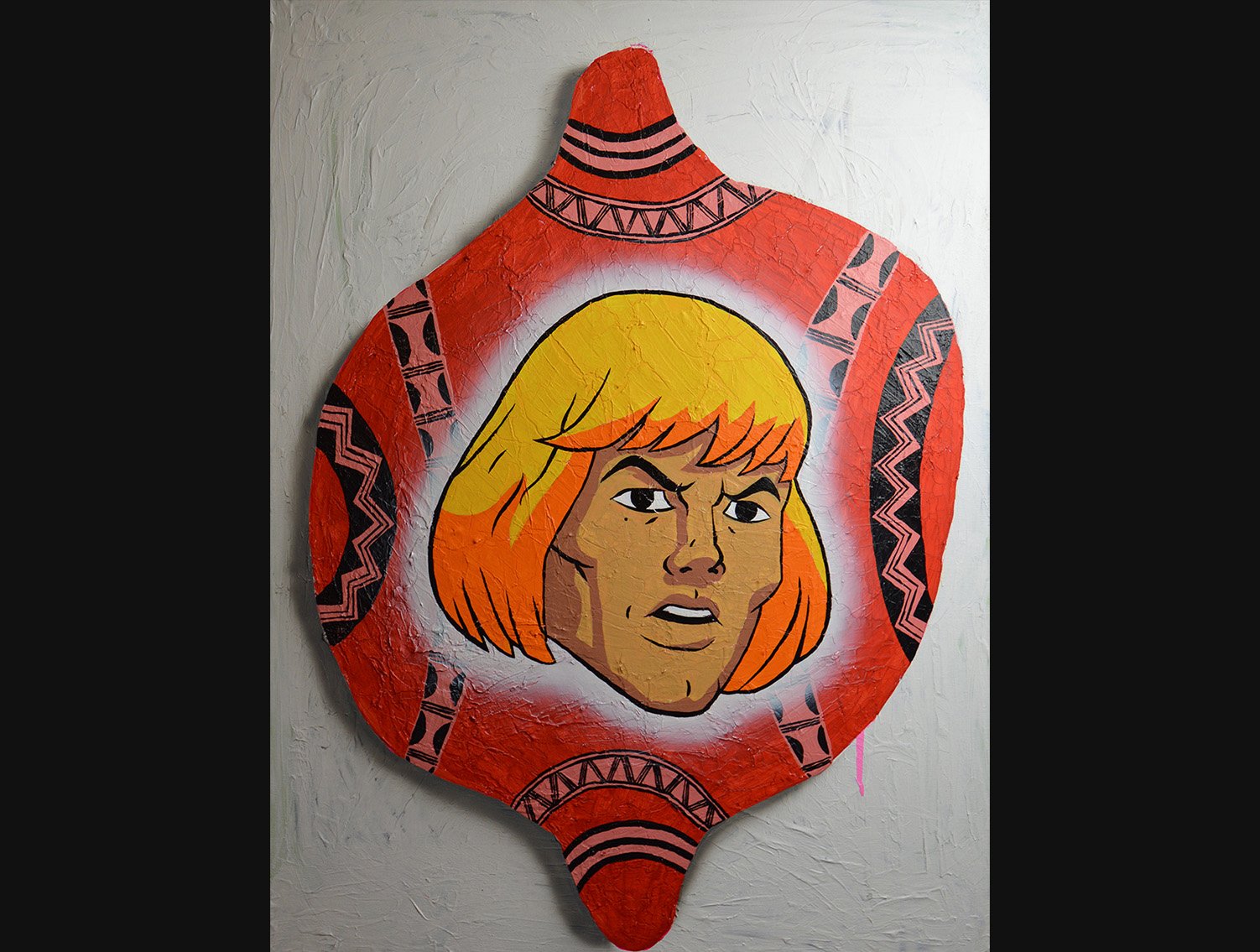
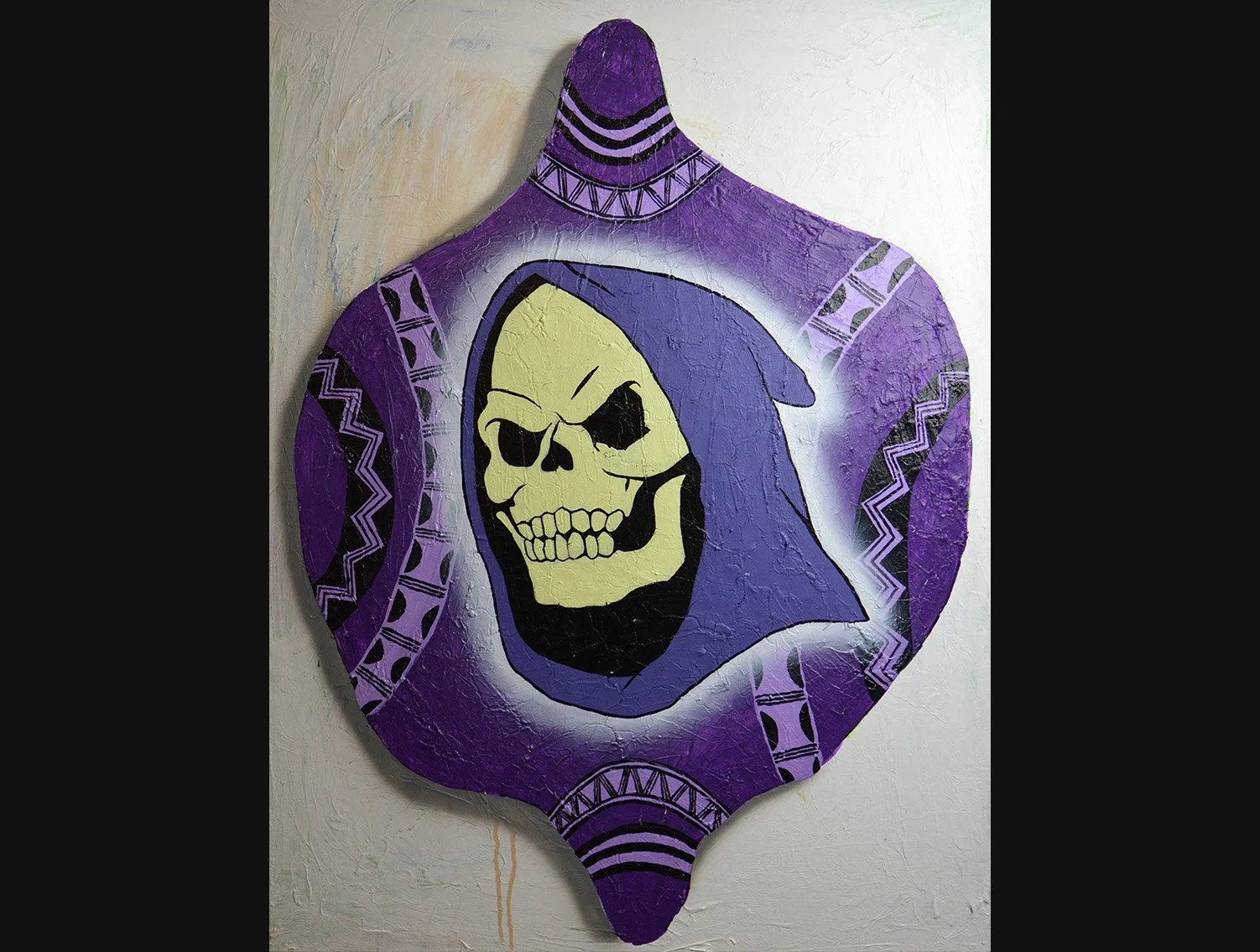
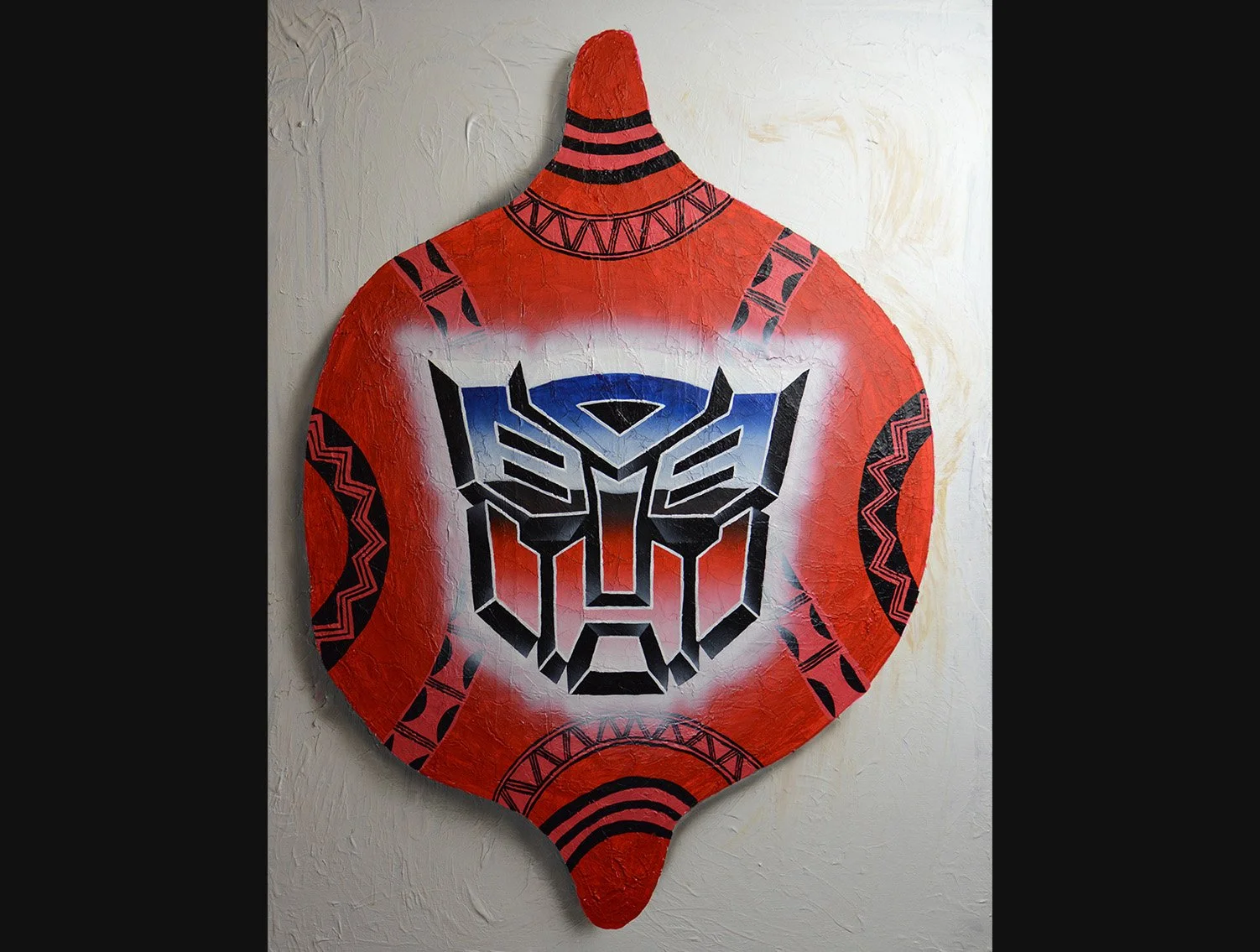
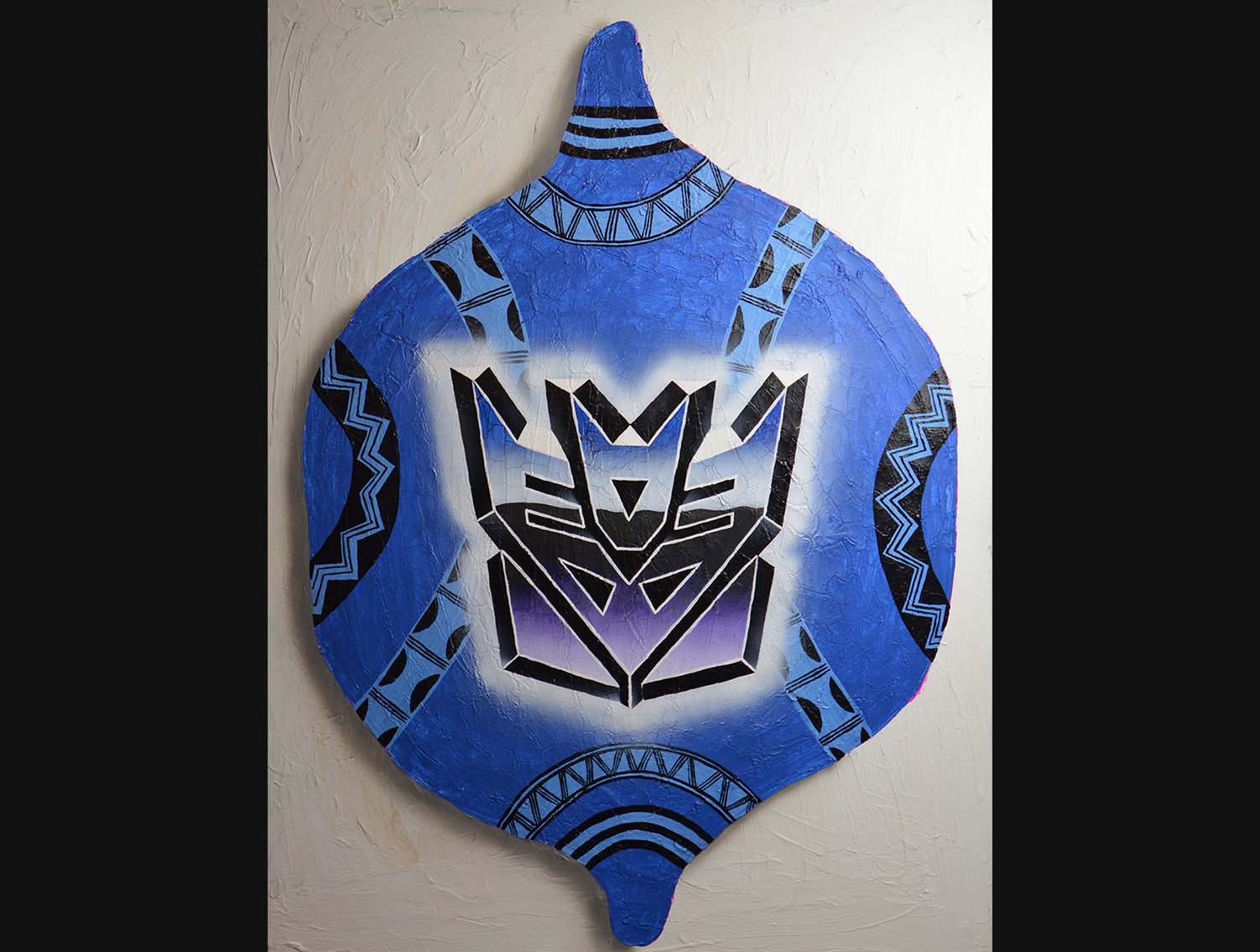
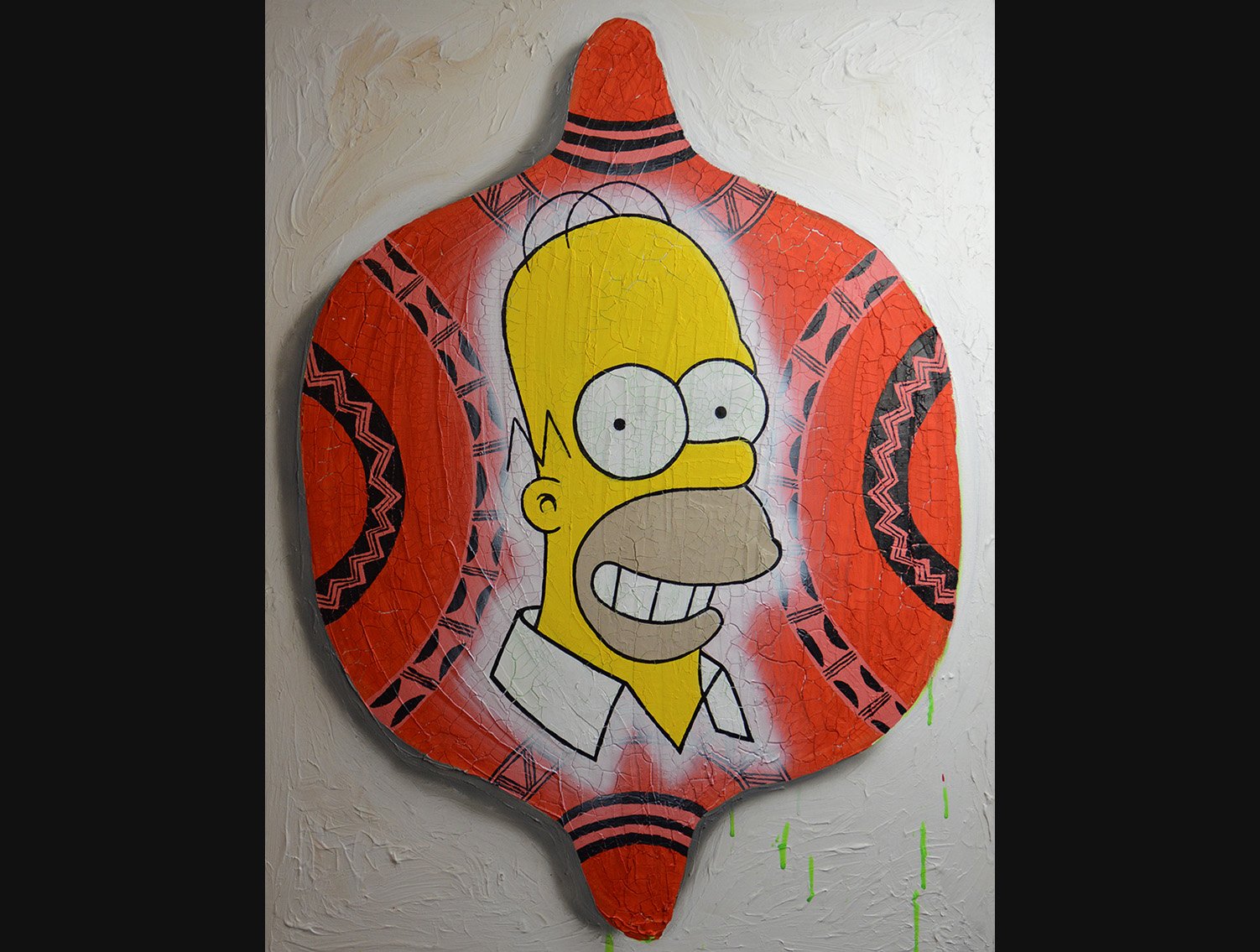
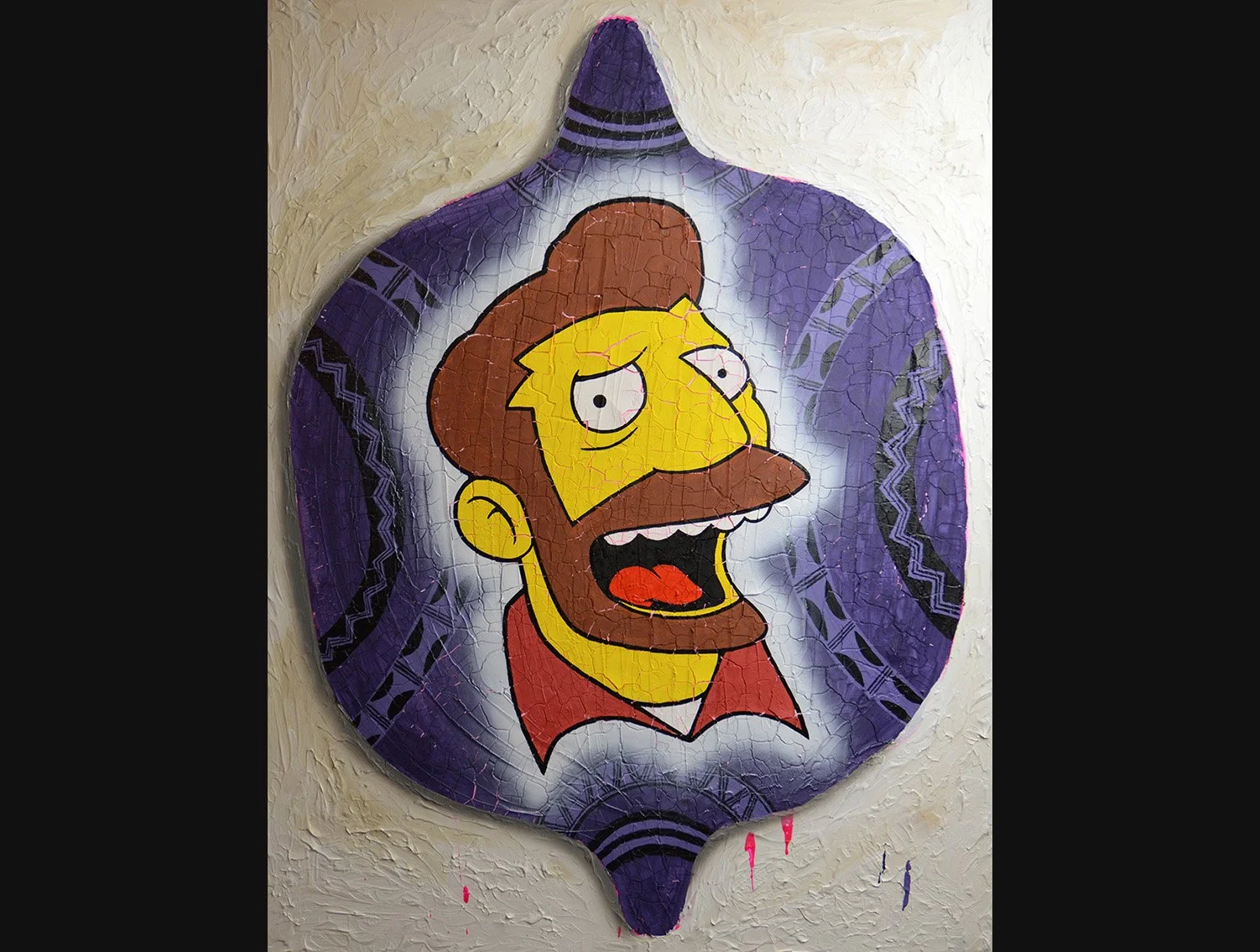
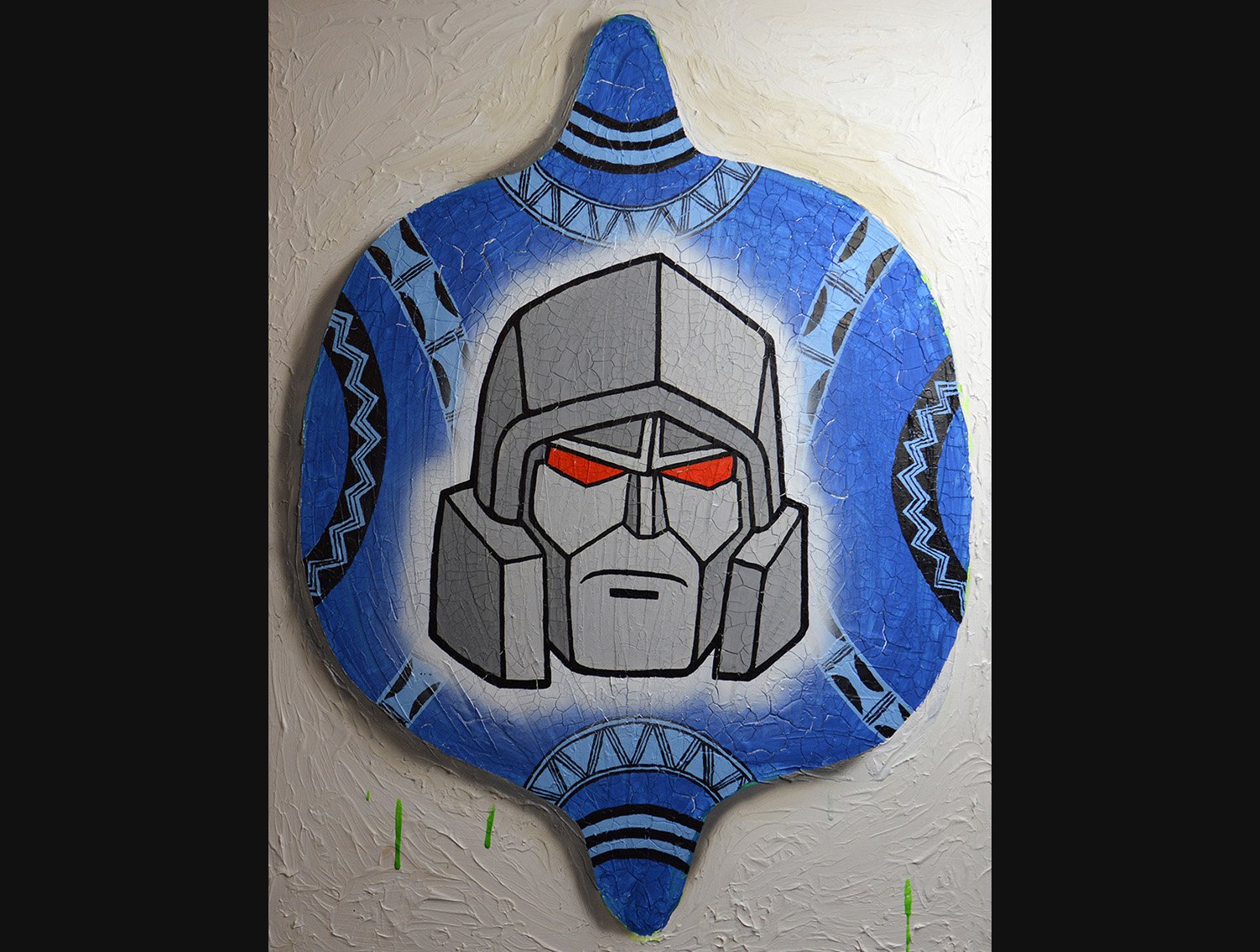
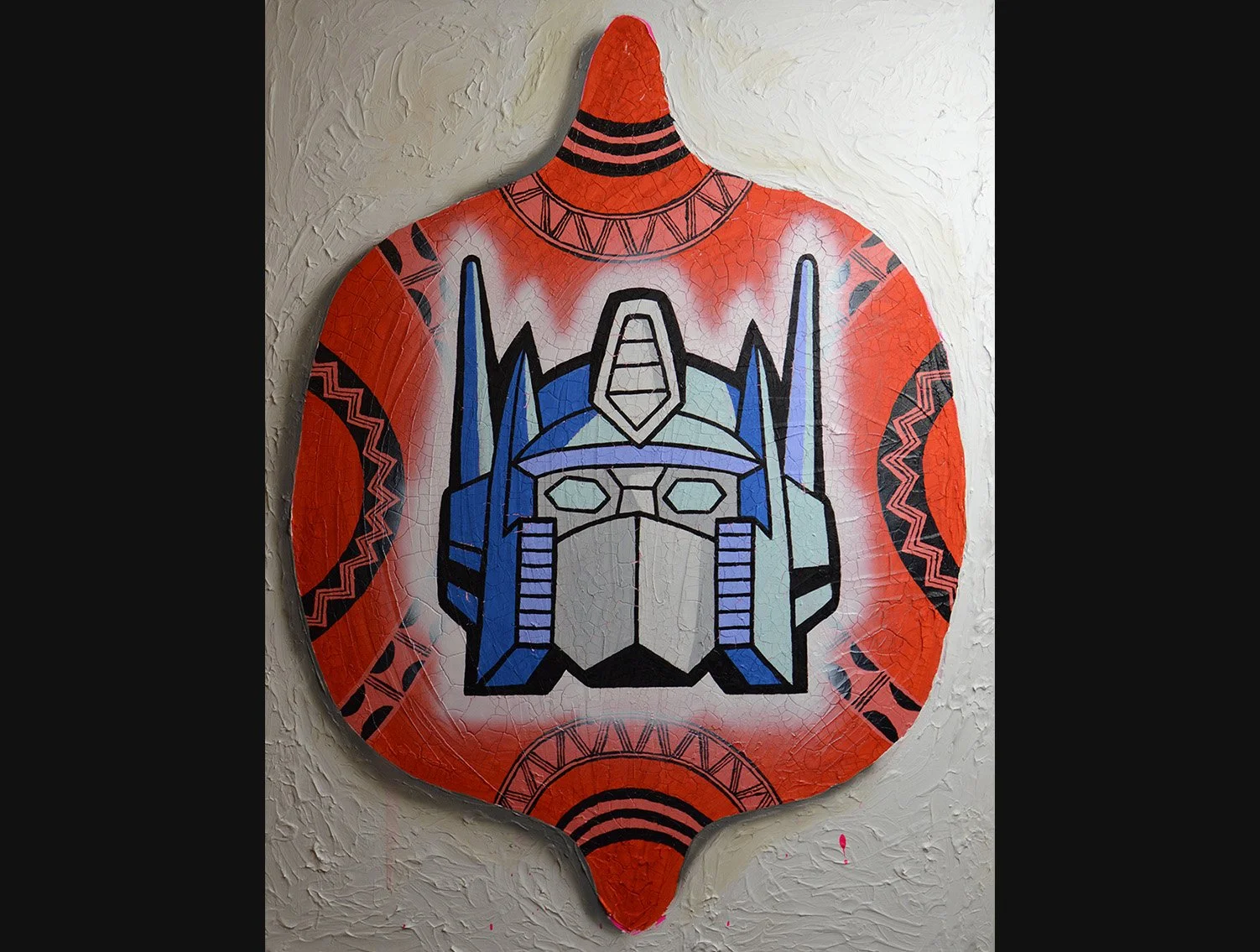
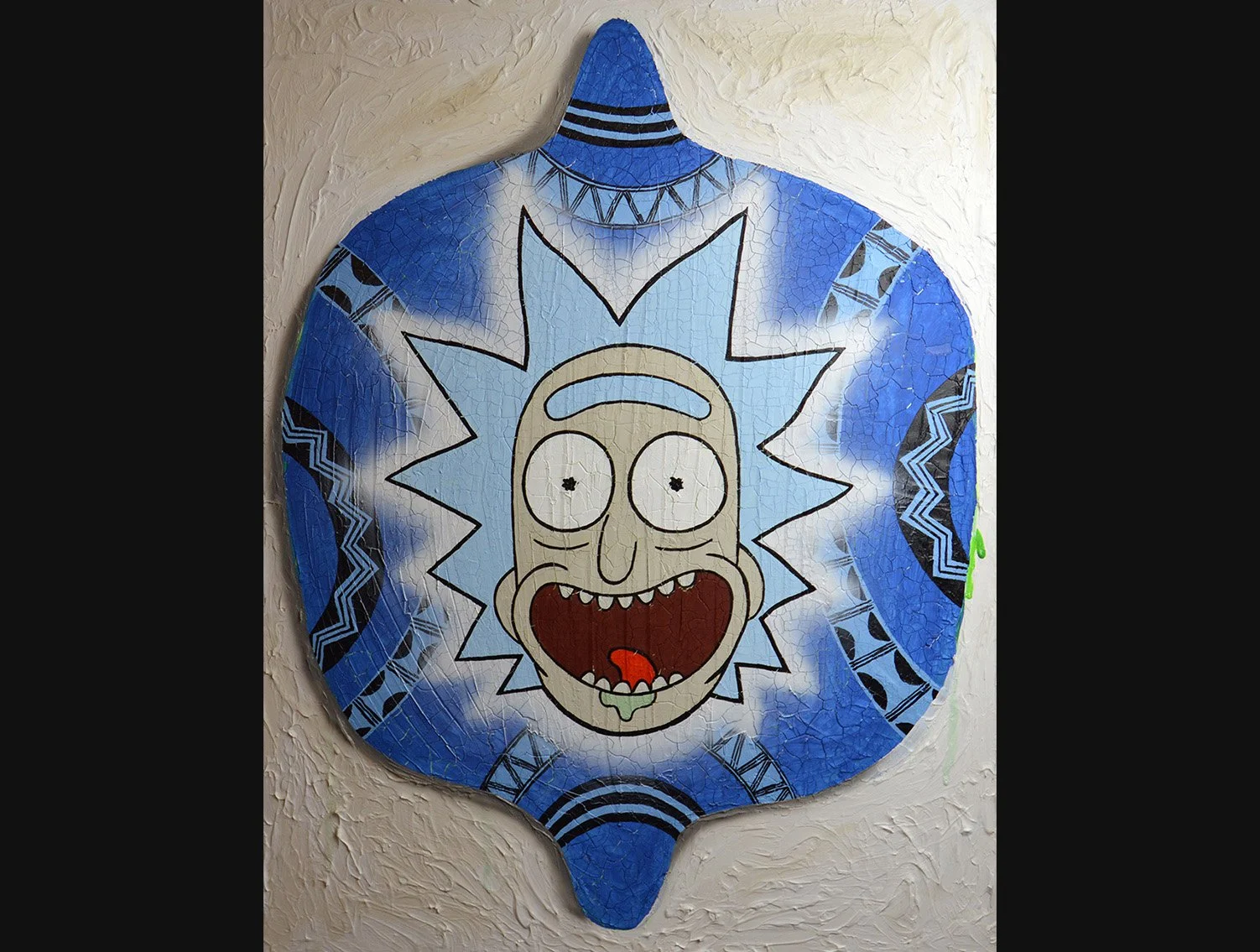
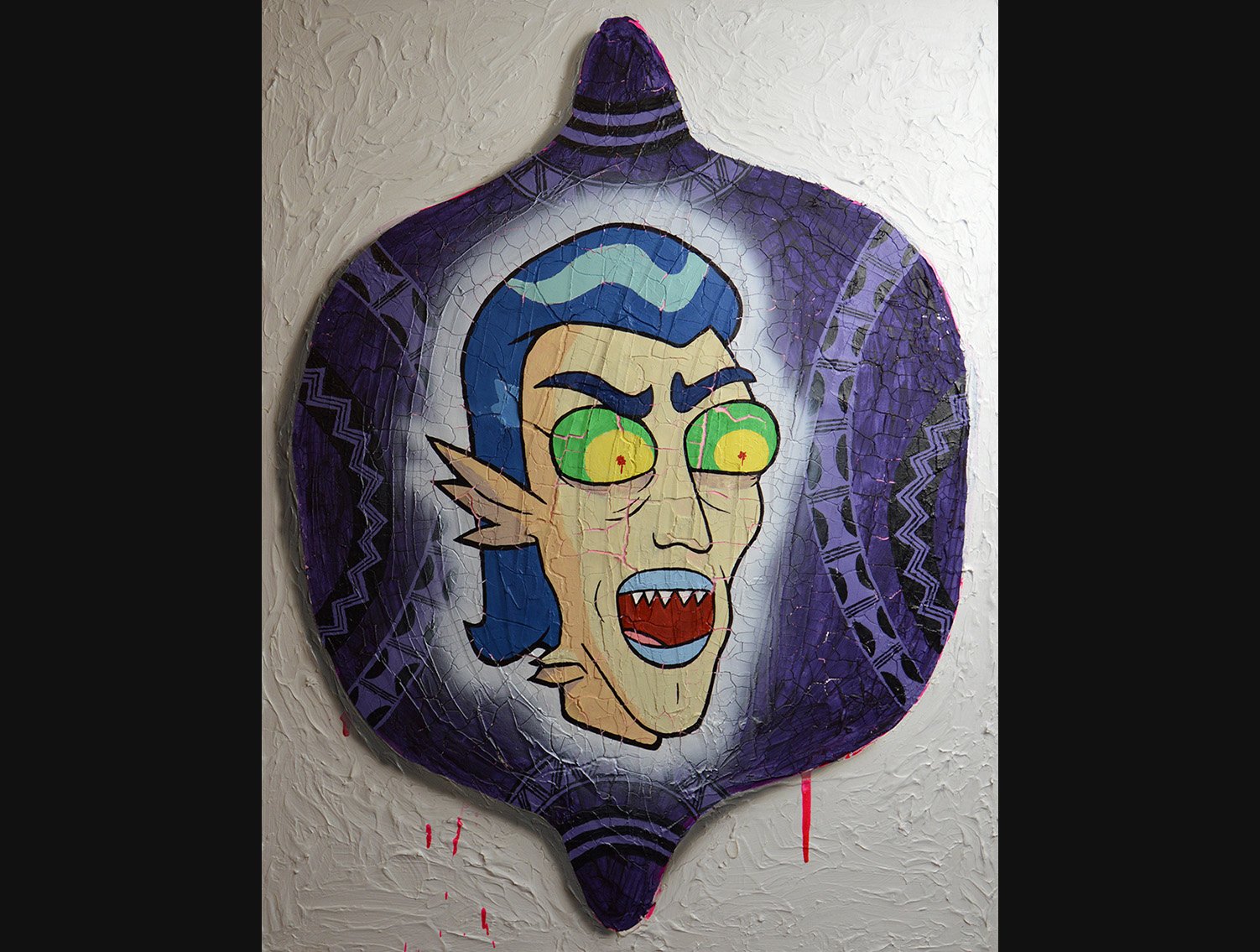
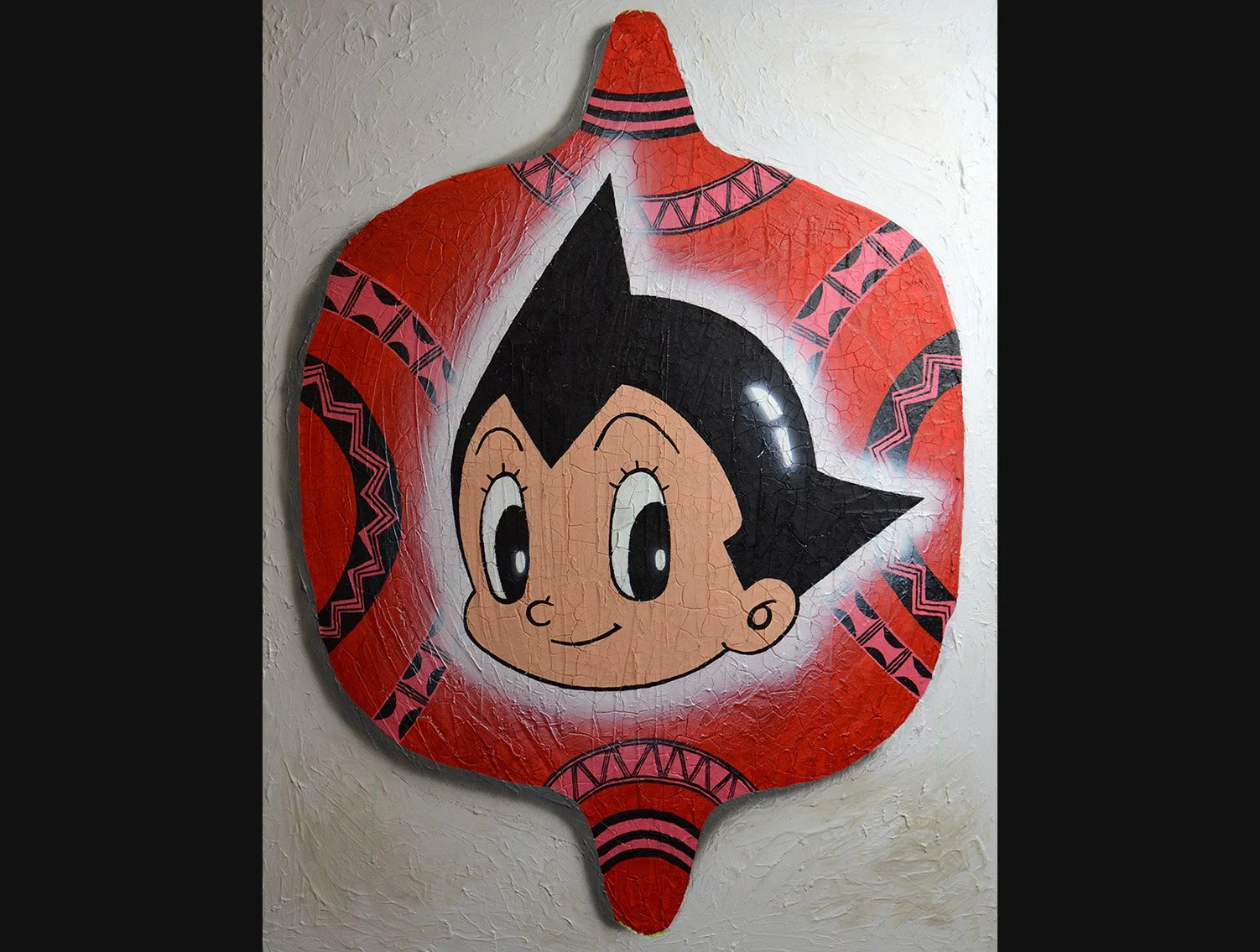
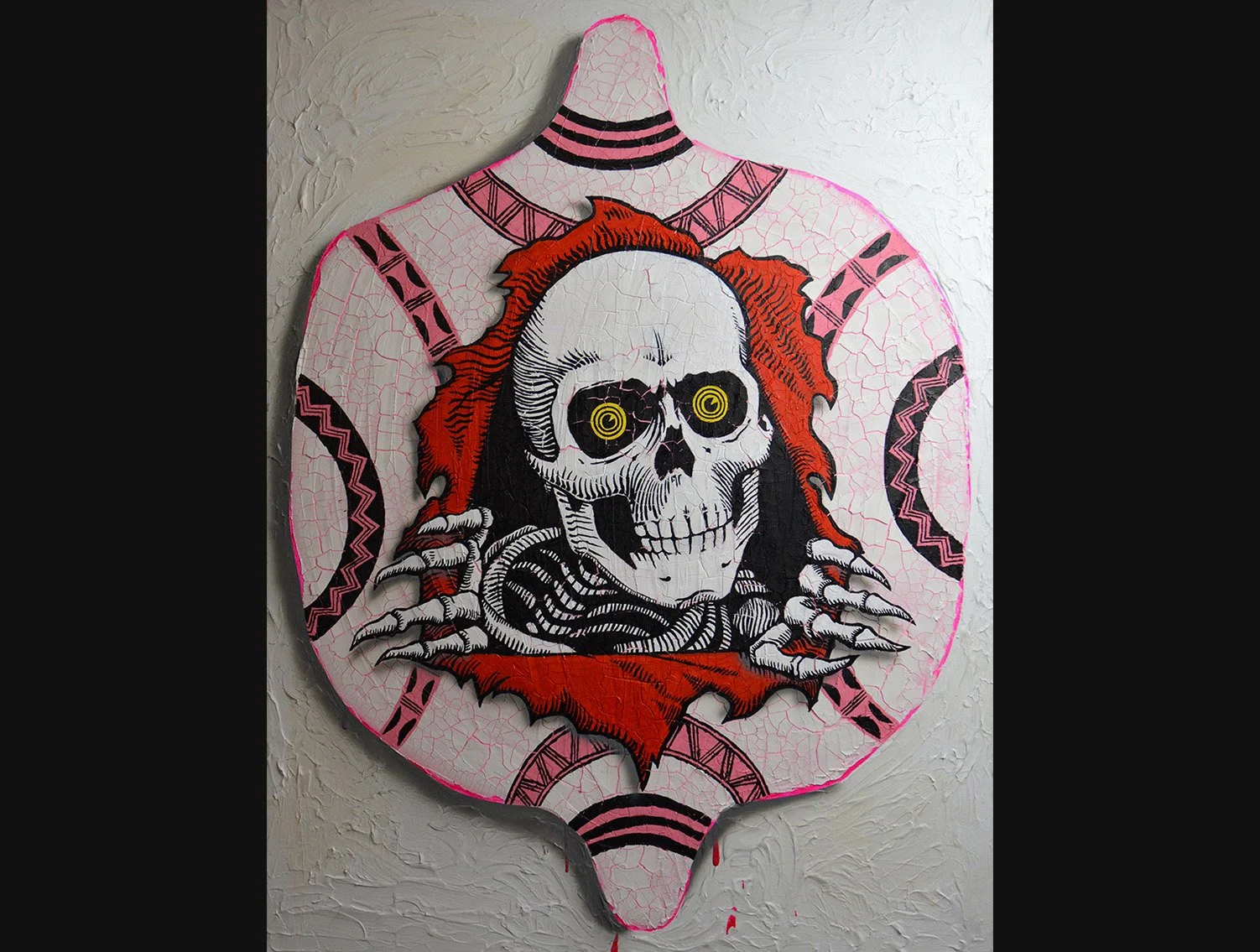
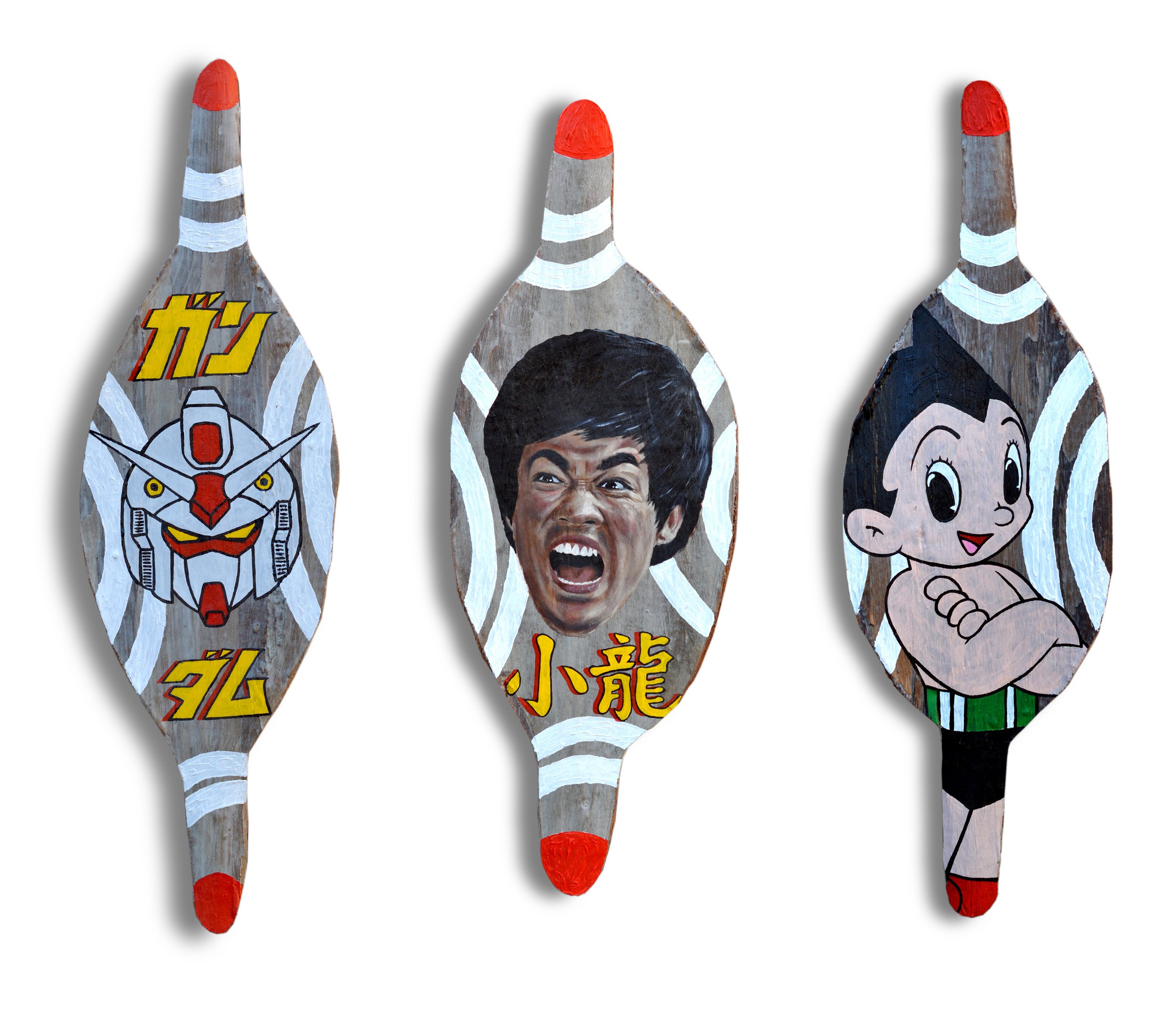
“Entombed in Joy” might be a contradiction in terms, but so are, in some sense, the paintings it names. In Shen’s most buoyant body of work yet, cartoon characters and emblems familiar to him as a kid growing up in the 80s are juxtaposed against punch-colored shields with patterns of Shen’s Ngarrindjeri clan and Song dynasty roots. Describing this work to me over the phone, Shen referred often to the notion of “customisation,” a term that’s revealing as it’s more commonly used in reference to skateboards than to canvas paintings.
To customise is to add to an existing, typically mass-manufactured piece of something attached to the body. One adds stickers, or badges, or stenciled-in symbols to a backpack, a jacket, a hat or a skateboard, signaling to one’s peers what one likes and, by extension, the type of person one is. Customisation is at once an expression of individuality and one’s affiliation with a collective; it seeks after recognition from like-minded appreciators of, say, Joy Division or Osprey or Basquiat or in one of Shen’s recent paintings, He-Man, that muscled, blond, cartoon hero who first appeared in Masters of the Universe in 1981. Inasmuch as He-Man’s image signals a certain ideal masculinity, or even the fictional world in which he exists, it signifies a certain moment of TV history, linked in the minds of those who lived through it all manner of personal, and childhood, associations.
All of this is interesting to consider in light of the fact that what Shen is customising in these paintings are shields. There is perhaps already a protective function to the act of customising a black denim jacket or backpack, as the wearer shields the naked garment with references to the interests and affiliations that form the armour of their identity. The cartoon characters and symbols in the foreground of Shen’s paintings were some of the first reference points for his identity as a child, predating even his awareness of what it meant to be Chinese and Ngarrindjeri in Australia. While previous bodies of work have dealt explicitly with his heritage, this work sees the patterning of his cultural roots visible behind the characters and emblems in the fore – signs to which anyone, but particularly adults of his generation, might gesture a hang-loose.
This body of work marks Shen’s return to art after a fallow period during the Covid-19 pandemic years, during which he put aside his art practice not least owing to the fact that he was mobilised into the Southern Australian COVID-19 emergency response. His choice to engage with this subject matter was motivated by his desire to find joy in making art after a dark time, as was his choice to inscribe these images in the comfortable, meditative medium of paint on canvas. Shen referenced American Henry Taylor and Australian Vincent Namatjira as recent influences, both painters taking an active, impasto approach that privileges the expression of character over anatomical realism. Like the works in “Entombed in Joy” Taylor and Namatjira’s paintings evidence the time they spent making them, revealing more with each viewing.
Whilst he’s embracing the indeterminacies of his art process perhaps more than he used to, Shen nevertheless considers painting – or photography, his other primary medium – a means of executing an idea. He has said he spends 90 percent of his creative time researching, planning, mulling over and mocking up an idea, and just ten percent making it— in whatever medium best suits the story. Shen’s training as an illustrator is palpable in the precision of his rendering, but also in his intent to illustrate a narrative concept through his art. In one previous body of work it was tintype photography, with its anthropological connotations, that Shen chose to employ in an exploration of his combined Chinese and Ngarrindjeri heritage. A series of paintings from 2017 see dots superimposed against the darkly painted portraits of his ancestors, conveying the artist’s sense of their distance from him. Both bodies of work share with “Entombed in Joy” the superimposition of pattern and image, though all toward very different ends.
Whilst notably more buoyant than many of his earlier bodies of work, there remains the issue of the title, whose first word “Entombed” we associate with death. To be “entombed in joy” might mean to be subsumed in it; to die happy and then stay that way. It also brings to mind imagery associated with an ancient tomb painted with aspirations for the deceased’s life in the afterworld. Imagine someone, hundreds of years from now, excavating a casket that is painted with an image of Homer Simpson on a red background inscribed with a Ngarrindjeri pattern. Imagine the tomb’s walls customized with images of all the things, real and imaginary, that forged the deceased’s identity on earth; with all of the things that brought them joy.
Written by Kate Butler